
[lwptoc]
[separator top_space=”20px” bottom_space=”20px”]
How To Know If You Have Mycotoxins
You may also be interested in the section of my blog dedicated to mycotoxins, click here, in particular:
- Mycotoxin Testing What You Need To Know
- Can Mould And Mycotoxins Cause Chronic Fatigue Syndrome?
- Can Mould And Mycotoxins Cause Gut Problems Such As IBS?
What Are Mycotoxins??
Mycotoxins are naturally occurring toxins produced by certain moulds (fungi) and can be found in food and in damp and water damaged buildings.
What Foods Contain Mycotoxins?
The moulds grow on a variety of different crops and foodstuffs including cereals, nuts, spices, dried fruits, apples and coffee beans, often under warm and humid conditions.
What Are The Symptoms Of Mycotoxins?
One way to know if you have mycotoxins is to see how many symptoms you have that associate with mould exposure.
Mycotoxins can cause a variety of adverse health effects and pose a serious health threat to both humans and livestock.
The adverse health effects of mycotoxins range from acute poisoning to long-term effects such as immune deficiency and cancer (1).
- Memory problems
- Spaciness
- Excessive fatigue
- Coughing
- Slurred speech
- Weak voice
- Watery eyes
- Light headedness
- Dizziness
- Weakness
- Headache
- Throat discomfort
- Sinus discomfort
- Nasal symptoms
- Bloating and other IBS related symptoms
- Visual changes
- Rash
This list comes from a paper written by Dr. Pizzorno and Dr. Shippy (3).
[banner_simple link_url="https://alexmanos.co.uk/recommendations/" title="Alex's Recommended Health Products" subtitle="Click Here" h_padding="20px" v_padding="20px" sep_padding="5px" border_color="#80ba3d" bg_color="#80ba3d" title_color="#fff" subtitle_color="#fff"]
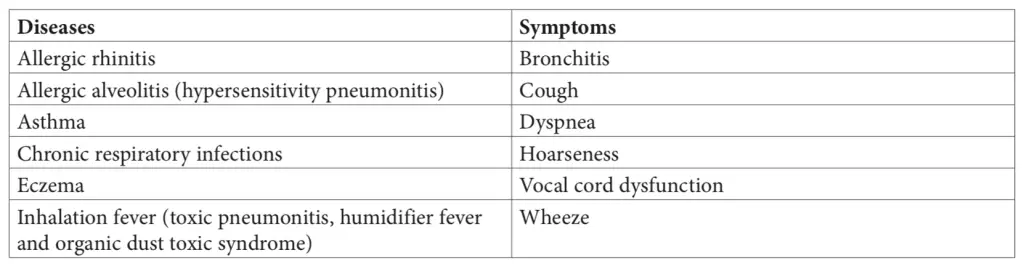
What Conditions Are Associated With Mycotoxins?
How Do You Test For Mycotoxins?
Mycotoxins can be tested via a urine test available from Mosaic Diagnostics. A sample of the report can be seen below.
Other tests that can prove helpful include:
- Organic acid testing.
- Comprehensive stool testing.
- Functional blood analysis.
Mycotoxins can contribute to a host of symptoms and conditions such as small intestine bacterial overgrowth (SIBO) and leaky gut and occasionally it is helpful to test for these as part of the overall program.
It's important to know a test isn't a full proof way to know if you have mycotoxins.
[banner_simple link_url="https://alexmanos.co.uk/contact/" title="Work With Alex Now" subtitle="Click Here To Make Contact" h_padding="20px" v_padding="20px" sep_padding="5px" border_color="#80ba3d" bg_color="#80ba3d" title_color="#fff" subtitle_color="#fff"]
How Do You Treat Mycotoxins?
One you know if you have mycotoxins it’s time to treat! Evidence for the role of oxidative stress in the pathophysiology of mycotoxin-related illness is increasing. The glutathione antioxidant and detoxification systems play a major role in the antioxidant function of cells. Exposure to mycotoxins in humans requires the production of glutathione on an “as needed” basis.
Research suggests that mycotoxins can decrease the formation of glutathione due to decreased gene expression of the enzymes needed to form glutathione. Mycotoxin-related compromise of glutathione production can result in an excess of oxidative stress that leads to tissue damage and systemic illness (1).
Check out my blog ‘Mould Illness: A Functional Medicine Approach‘ for a comprehensive discussion on treatment.
An absolutely brilliant book is by Dr. Jill Crista available on Amazon here.
Summary
In summary, to know if you have mycotoxins requires a comprehensive understanding of your history, appropriate symptoms, and a positive mycotoxin test.
- Have you knowingly been exposed to mould?
- Do you have symptoms that might suggest mycotoxins?
- Test for mycotoxins with a urinary mycotoxins profile from Great Plains Laboratory.
[banner_simple link_url="https://alexmanos.co.uk/alexs-library/" title="Recommended Books" subtitle="Click Here" h_padding="20px" v_padding="20px" sep_padding="5px" border_color="#80ba3d" bg_color="#80ba3d" title_color="#fff" subtitle_color="#fff"]
References
- Mycotoxins: Key Facts by WHO: click here.
- Is Mold Toxicity Really a Problem for Our Patients? Part I—Respiratory Conditions: click here.
- Is Mold Toxicity Really a Problem for Our Patients? Part 2—Nonrespiratory Conditions: click here.